See Inside Products — And Understand What Really Matters

BLS Product Teardowns provide clear, evidence‑led insight into competitor design, build quality, and implementation choices. Delivered as part of our Product & Supplier Intelligence offering, teardowns support competitive analysis, IP understanding, and supplier validation with confidence.

Book a Free Discovery Call

Geta tailored proposal for your product or supply chain intelligence needs.
Thank you! One of the team will be in touch soon.
Oops! Something went wrong while submitting the form.
By clicking submit, you consent to allow BLS to store and process the personal information. More information can be found in the
Privacy Policy.
Explore teardown options, and see what’s included at every level.

What’s Inside Products Tells You More Than Any Datasheet

Competitor products influence pricing, customer expectations, and sourcing decisions — yet the most important information is rarely visible. External specifications and marketing materials reveal little about how products are actually designed, how they are assembled, or what quality standards are being applied beneath the surface.

Without physical inspection, it is difficult to understand whether competing products are built around robust engineering principles or cost‑driven compromises, whether designs are mature or fragile, and how closely implementations align with accepted industry practices. This lack of visibility also creates uncertainty when assessing potential suppliers or evaluating IP exposure within a competitive landscape.

Product Teardowns address this gap by providing direct, physical insight into how products are constructed. By dismantling and analysing competitor products at component and assembly level, BLS reveals how designs are realised in practice — enabling informed assessment of design approach, build quality, and potential intellectual property considerations.

3 Steps. From Product Intelligence to Better Decisions

1. Choose your Focus

Clarify whether the teardown is focused on competitor understanding, IP awareness, product quality, supplier validation or another area.

2. Teardown and Analyse

We disassemble and assess products with a structured, engineer‑led approach focused on evidence and relevance.

3. Apply the Insight

Receive practical recommendations, risk heatmaps, cost‑saving opportunities, and competitive insights. Use them to negotiate better pricing, refine design, strengthen suppliers, and improve reliability.

Trusted by Innovators

“BLS’s teardown and benchmarking gave us a clear edge in our next product launch. Their insights on cost drivers and design choices were invaluable.”
Head of Product, Consumer Electronics Brand
“The supplier audit report from BLS highlighted risks we’d never have spotted. Their recommendations helped us avoid costly delays and improve quality.”
Director of Procurement, Industrial OEM
“We needed to understand why a competitor’s device was outperforming ours. BLS’s reverse engineering and performance testing gave us the answers and a roadmap to catch up.”
VP of Engineering, IoT Startup

Product Teardowns

At BLS, Product Teardowns are a structured Product & Supplier Intelligence activity designed to provide objective insight into competitor design and build execution.
Product Teardown
Reveal what competitors build—and why. We perform systematic disassembly, capturing high‑res imagery and a step‑by‑step record so you can see construction choices, complexity drivers, and potential cost levers at a glance. Executive summaries make insights shareable with non‑technical stakeholders.
  • Physical disassembly to sub‑assembly level with controlled teardown procedures and labelling.
  • Studio‑grade imagery (macro/micro, PCBs top/bottom, key ICs, connectors, mechanicals).
  • Step‑by‑step documentation, risks, and annotated visuals.
  • Executive summary with highlights, images, and mechanical process complexity callouts.
  • Key component identification(MCUs, PMICs, RF, sensors, power stages, displays, motors, batteries).
Cost Intelligence
Know what a product should cost—and why. We translate teardown insight into full BoMs, should‑cost models, assembly estimates, and tertiary costs to support negotiation, supplier strategy, and pricing decisions.
  • Full BoM creation with manufacturer/part numbers, supplier mapping, mBoM (dimensions/weights), PCBA stack‑ups.
  • Component should‑costing at realistic volume tiers (e.g., 10k/100k), including mechanicals.
  • Assembly cost estimation (labor minutes per operation, overhead by region/cell/line norms).
  • Tertiary cost estimation (packaging assumptions, air vs. sea cost bands, accessories).
Quality & Reliability Intelligence
See workmanship standards—and the risks they create. From solder quality and rework indicators to conformal coat and cleanliness, we assess build quality against IPC cues. We can review reliability assumptions and model MTBF/MTTF to anticipate failures before they surface in the field.
  • Soldering & build quality review (wetting, fillets, residues, tombstoning, skew, lifted pads).
  • Performance‑vs‑spec checks (when paired with testing modules) to validate claims.
  • Reliability reviews of HALT/HASS data and likely failure modes (where provided).
  • Reliability prediction (part‑count/stress‑based MTBF/MTTF, environment profiles, risk register).
Reverse Engineering
Understand how it really works. We trace critical circuits, map functions to hardware blocks, and—where possible—attempt firmware extraction to support IP, redesign, or security reviews.
  • Circuit tracing of power rails, signal paths, protection elements, and topology with annotated photos.
  • Algorithm and function mapping linking components to features and operational modes via block diagrams.
  • Firmware extraction attempts via standard interfaces (SWD/JTAG/UART), documenting method and outcome.
Performance & Benchmarking
Measure what matters—and compare it to the market. We work with you to define KPIs, execute targeted tests, and benchmark findings against peers to highlight true differentiators and gaps. Ideal for claim validation and objective positioning.
  • Competitor product benchmarking matrices and notes on unique differentiators.
  • Technical market positioning across Good/Better/Best tiers with strategic recommendations.
Design‑to‑Value (DTV)
Spend where customers feel it. We map cost to perceived value, pinpoint over‑ and under‑investments, and recommend material/process changes that preserve performance while improving margins.
  • Cost‑to‑feature mapping and rebalance recommendations.
  • Material assessments (housings, seals, contacts, TIM selection/placement) by appearance and basic tests.
  • “Could‑cost” scenarios with realistic lowest‑achievable cost roadmaps.
Testing Capabilities
Unlock actionable insights with our comprehensive in-house testing capabilities. All testing is performed by BLS experts using calibrated equipment and robust protocols, ensuring reliable, repeatable results that inform design, benchmarking, and compliance decisions. Our modular approach means you can select exactly the tests you need—delivered quickly and transparently.

Our testing capabilities include:
  • Battery life & charge time: Measure runtime and charging performance under defined usage profiles, with charge/discharge curve analysis and validation in real-world scenarios.
  • Temperature profiling: Map hotspots, heaters, and thermal paths using IR and thermocouple methods across multiple operating conditions.
  • Electrical measurements (Voltage, Current, Power): Assess supply rails, quiescent and dynamic current, and power consumption across modes for a complete electrical profile.
  • Digital logic analysis: Capture and decode common digital signals (SPI, I²C, UART, CAN), with annotated traces to verify protocol behaviour and reliability.
  • Force measurement: Quantify actuation, insertion, and extraction forces at key points, supporting ergonomic and durability assessments.
  • Analog signal analysis: Evaluate ripple, noise, bandwidth, and stability using oscilloscope and spectrum analysis for deeper analogue circuit insights.
Advanced Lab Testing
See the invisible. Prove the hypothesis. When the question demands deeper evidence, we coordinate advanced, non‑destructive and materials‑level analyses to visualize internals, verify materials, and characterize microstructures.
  • X‑ray/CT scanning for internal features, hidden joints, and layer structures (targeted CT reconstructions).
  • SEM/TEM microscopy for surface morphology and thin‑section microstructures.
  • Materials spectroscopy (EDS/XRF/Raman/FTIR) for elemental/chemical composition and coating/plastic/alloy ID.
Manufacturing Audits
Clarity on factory readiness—without the noise. We provide manufacturing audits with actionable reports and follow‑up reviews, then layer optional assessments to dive into capability, risk, equipment, lines, and documentation—remotely or on‑site.
  • Audit base: planning & scope, on‑site/remote assessment, findings with prioritized actions, review call.
  • Process capability assessment (Cp/Cpk where data exists) and CTQ mapping.
  • Supply chain risk check (concentration, geo/logistics exposure, single‑source & obsolescence scan).
  • Equipment benchmarking vs. requirements (accuracy, throughput, automation).
  • Production line validation (layout, takt alignment, bottlenecks, volume readiness).
  • Workforce competency assessment and SOP & documentation audit (control, coverage, revisions).
IP Evidence of Use
Build a technical case for IP enforcement or defence. We systematically analyse products to document where and how specific features, methods, or processes correspond to patent claims or IP rights.
  • Detailed mapping of product functions, components, and processes to potential claim elements.
  • Annotated photos, diagrams, and test results supporting observed functionality.
  • Confidence level indicators for each mapped element (e.g., confirmed, inferred, speculative).
IP Claim Mapping
Translating patent language into actionable technical evidence. We develop structured claim charts that align patent claim language with observed product features, supported by robust technical documentation.
  • Tabular mapping: claim element vs. observed feature with supporting evidence (photos, measurements, diagrams).
  • Clear indication of evidence source (test, teardown, datasheet, firmware analysis).
  • Notes on interpretation, gaps, and ambiguities for each claim element.
  • Summary of confidence levels and documented assumptions for review.
Dashboard mockup
Features

Why Partner With Us?

Full-Spectrum Intelligence: From teardown and cost modelling to supplier audits and reliability, we cover every angle, no blind spots.
Engineer-Led, Evidence-Based: Real engineers, real analysis. Every finding is backed by data, images, and clear documentation.
Actionable Recommendations: We don’t just deliver data, we provide practical steps to improve cost, quality, and performance.
Flexible, Modular Packages: Build your own service bundle or choose from set options, tailored to your product, budget, and timeline.
Trusted, Independent Partner: 100% objective, with no conflicts of interest. Our only goal is your technical and commercial success.

Resources and Insights

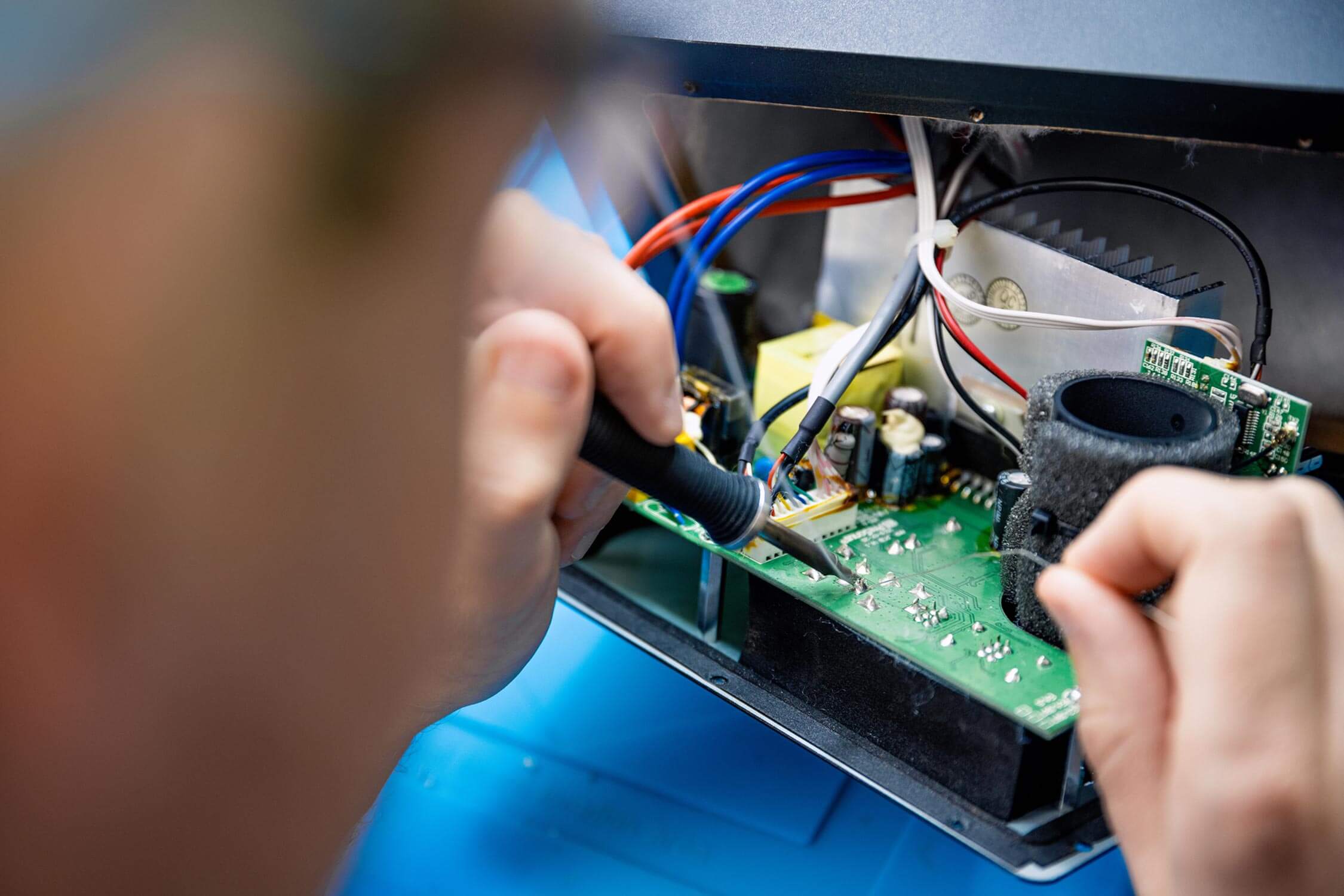
A technician solders wires onto a circuit board inside an open device.

How Teardown Analysis Drives Smarter Product Design

See how BLS transforms teardown findings into actionable business strategies. Learn how product insights drive smarter decisions in product development, sourcing, and market positioning for consumer electronics companies.

Read the Article

Product & Supplier Intelligence Services Menu

Not completely sure what kind of help you need? Request a copy of our Services Menu which provides a visual comparison of our packages, features, and pricing.

Access the Services Menu


Sample Report

See an example Product Intelligence report.

Download Sample Report

“Product and supplier intelligence evaluates rival products, revealing strengths, weaknesses, market position and IP risks. It helps businesses identify opportunities, pricing strategies and potential challenges for market entry."

James Yorkshades
Director

Frequently asked questions

Everything you need to know about the support we provide.
What types of products do you analyse?
We work with electronics, IoT, consumer devices, industrial products, and more.
How do you deliver your findings?
You’ll receive a detailed report with high-res images, benchmarking data, and clear recommendations, plus a review call to discu
Can I customise the service package?
Yes. Choose from teardown, cost modelling, supplier audits, and more. Build your own bundle or select a set option.
Do you offer on-site audits?
Absolutely. Our team can visit your suppliers or manufacturing sites for in-person assessments.
How fast can you deliver results?
Turnaround depends on scope, but teardowns typically take 5–10 days; audits and benchmarking can be scheduled to meet your deadlines.
What types of products can you analyse?
We support small, medium, and large electronics and electromechanical products—from wearables to smart home devices to industrial handheld tools.
Do you need physical samples?
Yes. We typically require a minimum of two units for teardown work. We can also purchase units on your behalf if required.
How long does the process take?
Turnaround times vary based on product size and selected modules but typically range from 5–20 working days.
Can you benchmark my product against competitors?
Yes. We provide feature benchmarking, performance testing, teardown comparisons, and cost comparisons where possible.
Can you provide should cost models for components and assemblies?
Absolutely. Our cost modelling includes component level costing, assembly labour estimation, overhead estimation, and packaging/shipping cost ranges.
Can you reverse engineer complex electronics?
Yes. We offer circuit tracing, function mapping, firmware extraction (if accessible), and internal imaging (X ray/CT) as required.
What if my supplier doesn’t allow audits?
We can conduct remote manufacturing audits, review documentation, or run a supplier risk assessment based on publicly available and provided data.
Do you work with regulated products (ATEX, IECEx, Medical)?
Yes—with the right tier or modules. Some regulated sectors require specific eligibility and additional documentation, which we support under specific packages.
Do you provide full BoMs?
Yes. Our BoM includes component identifiers and likely suppliers where this can be established.
Can you help with redesign or engineering changes?
We provide detailed redesign recommendations (cost, performance, reliability focused). Full engineering execution is out of scope but can be referred.
How do the IP Verification and Claim Chart modules work?
We map actual product functions, components, measurements, or behaviours against provided patent claims to determine where evidence of use may exist. All findings are technically grounded and supported by imagery, trace data, or teardown evidence, without providing legal infringement opinions.
What is included in a BLS manufacturing audit?
A manufacturing audit evaluates key areas of your production site, such as CSR, HSE, ESD controls, quality systems, documentation, workforce competency, process capability, and production line readiness. You receive a structured audit report with findings, evidence, and prioritised recommendations.
Do you offer both on site and remote audits?
Yes.
• Remote audits are suitable for early-stage assessments, documentation checks, and suppliers unwilling to grant immediate access.
• On site audits (available as an upgrade) provide deeper insight into practices, process discipline, equipment, traceability, and real world operations.
What size or type of facility can you audit?
We audit small, medium, and large product manufacturing facilities, including consumer electronics, electromechanical products, and industrial handheld assemblies. Oversized products or multi site audits can also be supported via custom scoping.
What documents or information do you need before the audit begins?
We typically request:
• Current SOPs and work instructions
• Quality system documentation
• Training records
• Process flow charts
• Layout diagrams
• Existing certifications (ISO 9001, ISO 14001, etc.)
This allows us to pre scope the audit and streamline the on site or remote visit.
How long does a manufacturing audit take?
A standard audit requires 2–6 days depending on product size and modules selected. On site audits add travel and scheduling time. After the audit, you receive a full report and a follow up review meeting.
What kind of deliverable will I receive?
You receive a detailed audit report including:
• Findings by area (CSR, HSE, ESD, quality systems, supplier controls, etc.)
• Risk ratings (e.g., High, Medium, Low)
• Evidence and photos
• A clear list of recommended corrective actions
• Prioritisation for short, medium, and long term improvements
Can you assess compliance for regulated products (ATEX, IECEx, UKEX)?
Yes—manufacturing audits can include checks specific to regulated sectors. This covers traceability, documentation compliance, special process controls, and areas relevant to regulated products.
Do you implement corrective actions for the factory?
Not directly. BLS identifies issues, provides actionable recommendations, and clarifies risks, but implementation of corrective actions is handled by the manufacturer. We can, however, support follow up reviews or re audits if required.
Can you audit multiple suppliers or facilities?
Absolutely. Many clients use BLS to compare multiple suppliers, validate new partners, or audit multi step supply chains. We can scope multi site audits across different regions.
What if the supplier is unwilling to cooperate?
We offer several alternatives:
• Remote audit using available documentation
• Risk analysis based on publicly available data and supply chain mapping
• Review of product samples combined with indirect capability indicatorsWe can also support you in supplier communications to ease concerns around transparency.
What are the most common issues you uncover in a manufacturing audit?
Frequent findings include:
• Weak ESD practices
• Poor documentation control or outdated SOPs
• Inadequate tooling calibration or equipment capability
• Insufficient operator training
• Lack of traceability for critical components
• CSR/HSE non conformities
• Process instability leading to variable quality
How does a manufacturing audit benefit my business?
Manufacturing audits help you:
• Prevent quality failures before they reach customers
• Reduce warranty and return costs
• Improve supplier reliability
• Identify cost saving opportunities
• Mitigate supply chain and compliance risks
• Gain confidence before scaling production or onboarding a new supplier
Book a free discovery call to explore how Product Teardowns can support your next decision.
Book a Discovery Call